California's Grid Is Evolving: From Short-Duration Batteries to Enduring Clean Power
Copyright © 2026 Philip C. Cruver
California's electricity demand peaks every evening as millions of residents return home, charge electric vehicles, turn on air conditioning, cook dinner, and increase overall power consumption. For years, four-hour lithium-ion battery systems have helped bridge this evening demand surge by storing excess daytime solar energy and discharging it during the peak hours. However, California's energy planners now recognize that future grid reliability challenges extend far beyond a four-hour evening peak.
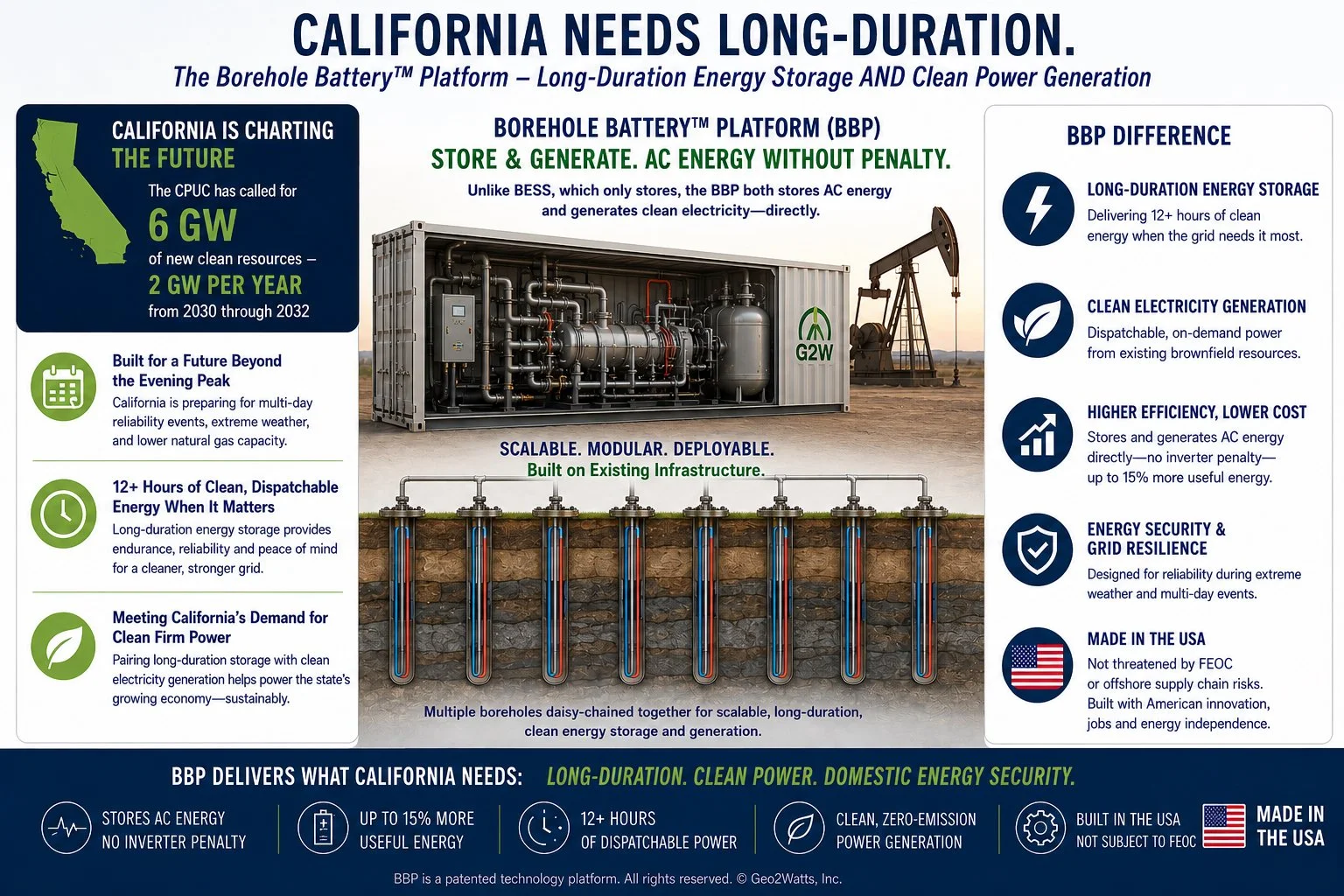
The California Public Utilities Commission (CPUC) recently ordered the procurement of 6 gigawatts (GW) of new clean energy capacity, requiring 2 GW per year from 2030 through 2032 to address projected electricity shortages driven by data centers, transportation electrification, building electrification, and continued economic growth. Importantly, at least 25% of this new capacity must come from resources that provide the attributes of clean firm power and long-duration energy storage (LDES).
The reason is simple: California's future reliability concerns are no longer limited to a few hours after sunset. As more natural gas generation retires and renewable energy penetration increases, the grid must be prepared for extended periods of low solar production, weather-related disruptions, heat waves, and multi-day reliability events. The state is increasingly seeking resources capable of delivering dependable electricity for 12 hours or longer, rather than simply shifting energy from one part of the day to another.
The energy transition is entering a new phase where endurance is becoming more valuable than peak shaving. For the past decade, the market rewarded technologies that could simply shift solar energy into the evening peak. The next decade will reward technologies capable of sustaining the grid through extended reliability events, renewable shortfalls, and growing electrification demand.
As California's Resource Adequacy (RA) requirements evolve and capacity values increasingly favor long-duration performance, investors, regulators, developers, and customers must recognize that not all storage technologies are created equal. The future grid will place a premium on resources that not only store energy, but can also deliver dispatchable and distributed clean electricity, resilience, and dependable capacity for many hours beyond sunset. California is moving from a peak-shaving paradigm to an endurance paradigm and the technologies that thrive will be those built for duration, reliability, and energy security.
This shift creates a significant opportunity for innovative technologies such as the Borehole Battery™ Platform (BBP). Unlike conventional battery energy storage systems (BESS), which store electricity in chemical cells and later discharge that electricity, the BBP stores energy as heat within repurposed wellbores and converts that stored thermal energy back into dispatchable, zero-emission electricity when needed. By repurposing existing idle oil and gas wells into underground thermal storage assets, the BBP offers a scalable pathway to deliver both LDES and dispatchable zero-emission electricity from existing brownfield infrastructure.
Unlike many utility-scale energy projects that require new substations, transformers, transmission upgrades, and years of interconnection studies, the BBP is designed to utilize existing brownfield infrastructure and grid connections already in place. This approach significantly reduces permitting risk, accelerates deployment timelines, lowers capital costs, and transforms end-of-life oil and gas assets into productive clean energy infrastructure capable of both storing and generating electricity when and where the grid needs it most.
As California seeks thousands of megawatts of new clean capacity, regulators are increasingly focused on technologies that provide duration, reliability, and firm generation capability. The BBP is uniquely positioned to help meet these emerging requirements while accelerating the transition of legacy energy infrastructure into clean energy assets for the grid of the future.